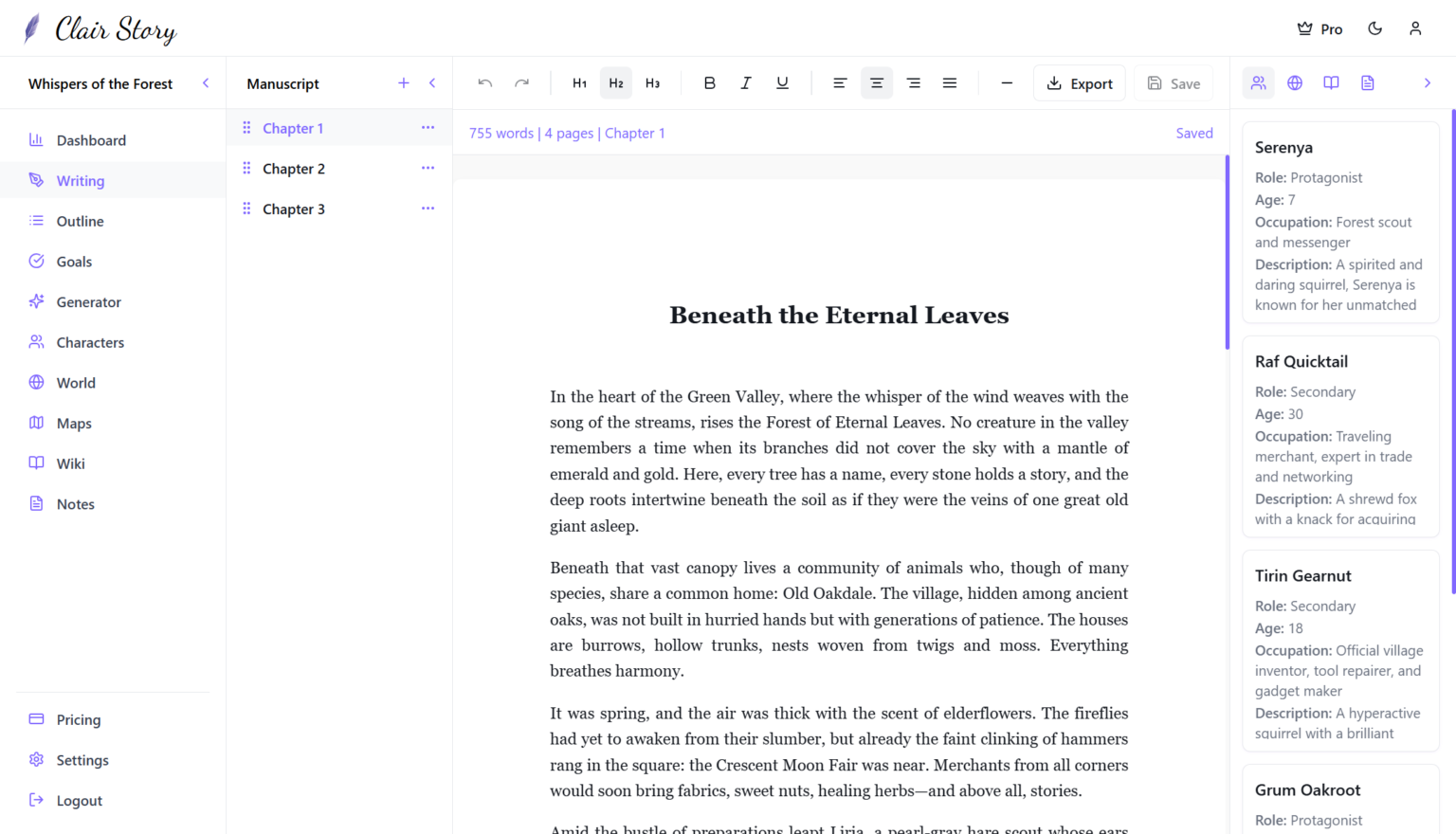
Try the best Writing App
Every great story begins with the first step. Sign up and enjoy a 30-day free trial to discover everything Clair Story has to offer.
- Full access
- No credit card required
How to Start Writing a Novel: 15 Proven Steps Every Beginner Must Know
August 2, 2025
Introduction: The Exciting Journey of Writing a Novel
So, you’ve decided to write a novel. That’s an exciting, bold step! Whether it’s a lifelong dream or a sudden spark of inspiration, the idea of creating entire worlds, memorable characters, and captivating plots can feel thrilling, and a bit overwhelming. But don’t worry. Writing a novel is less about waiting for the “perfect” idea and more about developing the right habits, structure, and mindset.
This guide will walk you through everything you need to know about how to start writing a novel, from building a strong foundation to writing that first messy draft. By the end, you’ll feel more confident, equipped, and ready to embark on your storytelling journey.
Understanding the Basics Before You Begin
What Makes a Novel Different from Other Writing Forms
Novels are long-form narratives, usually ranging between 60,000 and 120,000 words. Unlike short stories or essays, they allow for deep exploration of characters, themes, and conflicts. Novels often involve multiple subplots, character arcs, and detailed world-building.
Common Myths About Writing Novels
Myth 1: You need to wait for inspiration.
Myth 2: Only professional writers can write novels.
Myth 3: The first draft must be perfect.
In truth, novels are built step by step, draft by draft. Even bestselling authors start with imperfect beginnings.
Preparing Yourself Mentally and Creatively
Developing a Writer’s Mindset
Writing a novel isn’t about waiting for “the muse.” It’s about persistence. Believe that your story deserves to be told, and understand that discipline is just as important as creativity.
Setting Realistic Goals and Deadlines
Instead of aiming to write 100,000 words in a month, start with small, achievable goals. For example:
Write 500 words a day.
Complete one chapter per week.
Finding Inspiration and Motivation
Inspiration can come from anywhere, books, movies, real-life experiences, or even daydreams. Keep a notebook handy and jot down ideas whenever they strike.
Building the Foundation of Your Novel
Choosing the Right Genre and Theme
Your genre guides the expectations of your readers. Do you want to write a fantasy adventure, a mystery thriller, or a heartfelt romance? Pick one that excites you, because you’ll be spending months (maybe years) in that world.
Creating a Strong Story Idea
A great story idea usually combines:
A character (who wants something),
A conflict (that prevents them from getting it), and
Stakes (what happens if they fail).
Crafting Compelling Characters
Readers connect with characters more than plots. Give your main characters goals, flaws, and internal conflicts. The more human they feel, the more readers will care.
Understanding Conflict and Stakes
Conflict drives your story forward. Ask yourself: What does my character want, and what stands in their way? Without conflict, even the most beautiful prose falls flat.
Structuring Your Novel Like a Pro
The Importance of Outlining
Before diving into your first draft, it helps to map out the journey. An outline acts as your roadmap, keeping your story on track. It doesn’t have to be rigid; think of it as a flexible guide that adapts as your story grows.
Classic Three-Act Structure
Most novels follow the tried-and-true three-act structure:
Act One – The Setup: Introduces characters, setting, and the central problem.
Act Two – The Confrontation: The longest section where challenges and conflicts rise.
Act Three – The Resolution: The climax and conclusion where loose ends tie up.
Alternatives: Snowflake and Hero’s Journey
Snowflake Method: Start with a simple premise and expand it step by step.
Hero’s Journey: A timeless framework where the protagonist embarks on a quest, faces trials, and transforms.
Plotting vs. Pantsing: Which Style Suits You?
Writers often fall into two camps:
Plotters: They meticulously plan every scene before writing.
Pantsers: They “fly by the seat of their pants,” discovering the story as they go.
Most authors use a mix of both. Try experimenting to see what fits your creative style.
Developing a Writing Routine
Setting Up Your Writing Space
A dedicated writing spot signals your brain it’s time to focus. It doesn’t need to be fancy—just comfortable, quiet, and free from major distractions.
Scheduling Daily Writing Sessions
Consistency beats intensity. Writing 300–500 words daily can get you a full novel draft in a few months. Choose a time of day when your energy is highest, whether it’s early morning or late at night.
Overcoming Writer’s Block
Every writer hits roadblocks. Here’s how to push through:
Change your environment.
Freewrite for 10 minutes without editing.
Skip to a scene you’re excited to write.
Remember: progress is progress, no matter how small.
Writing the First Draft
Tips for Starting Your First Chapter
Your opening scene should grab attention. Start with action, intrigue, or emotion rather than lengthy backstory. A strong hook keeps readers turning pages.
Writing Without Over-Editing
Perfectionism is the enemy of first drafts. Resist the urge to rewrite every sentence. Your goal is momentum, not mastery, editing comes later.
Embracing the Messy First Draft
The first draft is supposed to be messy! Think of it as sculpting raw clay, you can shape and polish it in revisions. Celebrate progress, not perfection.
Improving Your Craft as You Write
Dialogue That Feels Real
Good dialogue mimics real speech but is sharper and more purposeful. Avoid info dumps. Instead, let dialogue reveal character, emotion, and conflict.
World-Building and Setting the Scene
Whether you’re writing fantasy or contemporary fiction, your setting matters. Describe enough detail to immerse readers without overwhelming them. Sensory details, smells, sounds, textures, make your world vivid.
Writing with Strong Voice and Style
Your writing voice is your unique fingerprint. Don’t force it; it develops over time. Read widely, practice often, and let your natural rhythm shine.
Share this article
More articles
Try the best Writing App
Every great story begins with the first step. Sign up and enjoy a 30-day free trial to discover everything Clair Story has to offer.
- Full access
- No credit card required
The best writing app for every writer.
Clair Story, 2025. All rights reserved.